
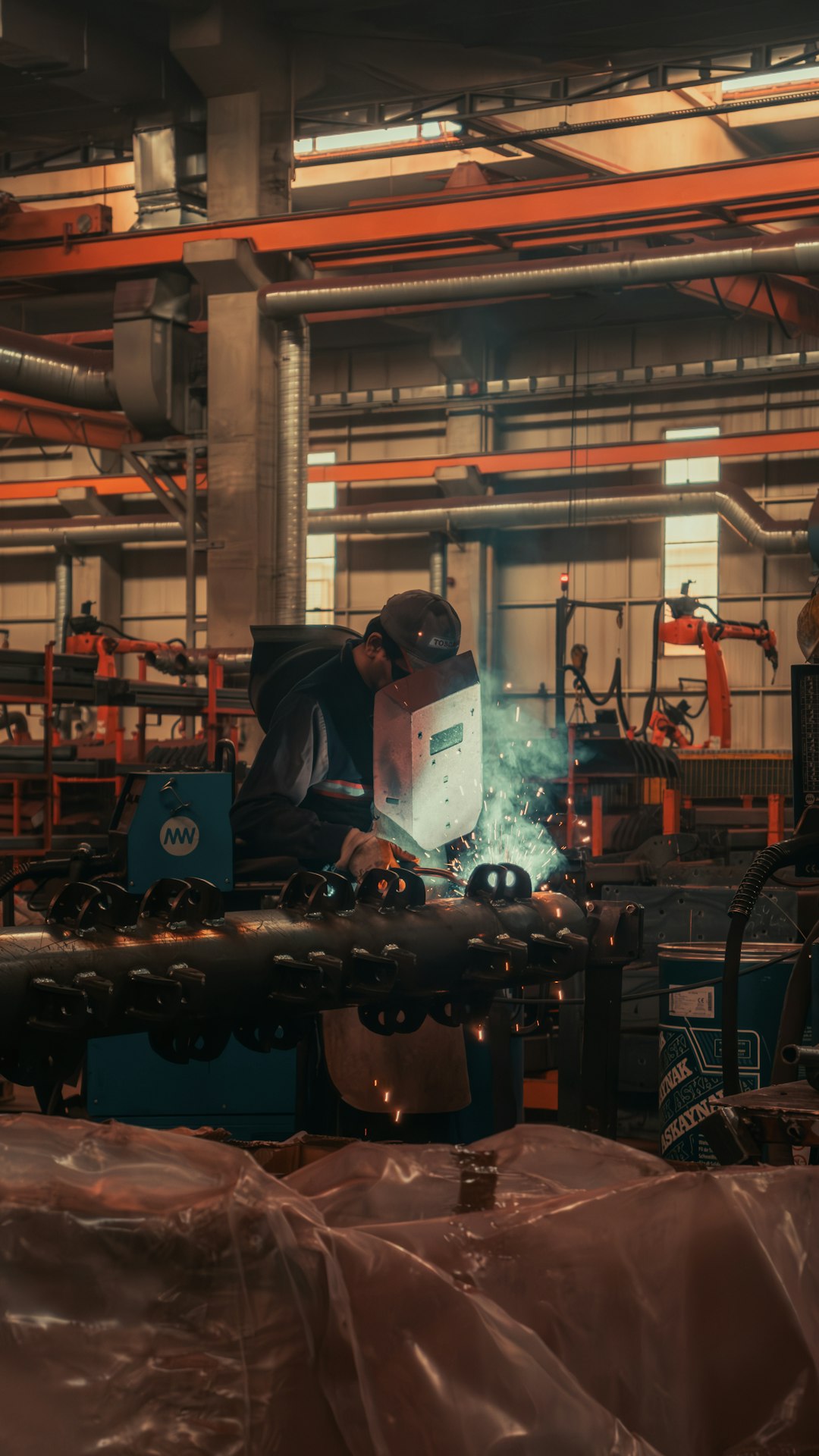
Industrial operations rarely struggle because of a lack of effort. More often, they struggle because the equipment, tolerances, workflows, and quality expectations are not fully aligned. A production line may need tighter consistency, faster output, safer handling, or better durability under constant use, yet the real challenge lies in converting those needs into machinery that performs predictably in the field. This is where disciplined engineering matters most. AIR-QC, a precision machine manufacturer in Thailand, operates in that exact space: translating practical industrial demands into machine-building solutions that are accurate, durable, and ready for real operating conditions.
Understanding Industrial Needs Before Designing the Solution
The strongest engineering work begins long before fabrication. In industrial settings, a machine is only successful if it answers the specific pressures of the application. That means understanding more than dimensions and output targets. It also means studying the environment in which the equipment will run, the repeatability required, the materials involved, maintenance realities, and the cost of downtime if performance slips.
This early stage is often underestimated, yet it determines whether a project becomes a useful asset or a source of recurring compromise. A well-qualified requirement captures both technical and operational expectations. For example, a production team may ask for speed, while quality teams may prioritize repeatability, and maintenance teams may need easier access to wear components. Precision engineering must reconcile all three.
At this stage, effective industrial development usually depends on clarity in several areas:
- Process requirements: cycle time, throughput, tolerance, and repeatability
- Material behavior: hardness, thermal response, contamination sensitivity, and wear patterns
- Operating environment: heat, humidity, vibration, dust, or corrosive exposure
- Integration needs: fit with upstream and downstream systems
- Serviceability: inspection access, replacement intervals, and ease of maintenance
By focusing on these fundamentals first, manufacturers avoid designing a machine that looks correct on paper but falls short in daily operation.
From Requirement to Precision Machine: The Engineering Path
Once the need is defined properly, the project moves into the more visible stages of engineering: design, material selection, machining strategy, assembly, and verification. What separates ordinary work from reliable industrial performance is the discipline that links each stage to the original requirement.
In precision manufacturing, every design decision has consequences. A small change in material specification can influence thermal stability. A convenient component arrangement may create maintenance difficulties later. A tolerance that seems conservative may increase machining time without improving function. Sound engineering solutions for industries depend on making choices that are technically justified, not simply familiar.
AIR-QC’s role as a precision machine manufacturer in Thailand is relevant here because industrial clients often need more than fabrication alone. They need a partner that can interpret design intent in practical production terms. That includes considering manufacturability, inspection methods, assembly accuracy, and how a finished machine will behave in continuous use.
| Project Stage | Main Focus | Industrial Benefit |
|---|---|---|
| Requirement review | Clarifying function, tolerance, and operating conditions | Reduces design mismatch and late-stage revisions |
| Engineering design | Structure, motion, materials, and fit | Improves reliability and performance consistency |
| Precision machining | Controlled fabrication of critical parts | Supports accuracy and repeatable assembly |
| Assembly and alignment | System integration and functional fit | Prevents cumulative error across the machine |
| Inspection and validation | Dimensional and performance verification | Confirms readiness for industrial use |
When these stages are connected instead of treated as isolated tasks, the outcome is more dependable and far easier to manage over the long term.
Why Integrated Quality Control Changes the Outcome
Precision is not a feature that can be added at the end of production. It must be protected throughout the process. In industrial machine building, quality control is not just about catching defects before delivery. It is about preserving design intent from raw material to final assembly.
This is one reason integrated capability matters. If design, machining, assembly, and inspection are disconnected, small misunderstandings can compound into major deviations. Tolerances may be met individually while the full system still underperforms. Alignment may appear acceptable until operating loads expose hidden weaknesses. A quality-driven process reduces those risks by checking the right points at the right time.
That is why companies looking for engineering solutions for industries often value partners that can connect manufacturing and inspection in one disciplined workflow rather than treating quality as a final checkpoint.
In practice, strong quality control often includes:
- Incoming material verification to confirm that the build starts from the correct specification.
- In-process inspection to detect deviation before it affects downstream operations.
- Assembly validation to ensure critical fits, alignment, and movement behave as intended.
- Final functional checks to confirm readiness under expected operating conditions.
This approach matters especially in sectors where consistency is inseparable from output quality. A machine that performs well only intermittently is not truly precise. Real precision means repeatable results over time.
Where Precision Engineering Solutions Create the Greatest Value
Not every industrial challenge requires a fully custom system, but many require tailored engineering judgment. Precision engineering solutions are particularly valuable when operations face one or more of the following conditions: strict tolerances, difficult materials, high-volume repetition, delicate handling, or costly downtime from failure.
In these environments, the value of a well-made machine extends beyond output. It influences scrap rates, maintenance intervals, operator confidence, product uniformity, and the ability to scale without introducing quality instability. A carefully engineered system can also simplify operation by reducing manual correction and improving process predictability.
Common areas where this value becomes clear include:
- Special-purpose machinery designed around a specific production task
- Precision fixtures and tooling that support repeatable positioning and measurement
- Automated handling systems where alignment and timing directly affect quality
- Replacement or upgrade components for legacy equipment that must maintain exact fit and performance
The commercial benefit is not only speed or capacity. It is control. When a machine consistently performs within expected limits, operations become easier to plan, troubleshoot, and improve. That reliability is often the true return on precision engineering.
Conclusion
Industrial progress depends on more than acquiring equipment. It depends on choosing machinery and manufacturing partners that understand how to convert operational pressure into practical, durable engineering. The best engineering solutions for industries are not abstract concepts; they are the result of careful requirement analysis, intelligent design, precise fabrication, and quality control that is built into every stage. AIR-QC reflects that model well. As a precision machine manufacturer in Thailand, it represents the kind of focused capability that helps industrial businesses move from vague needs to dependable machine performance. When precision, consistency, and long-term usability matter, that transformation is what makes the difference.
——————-
Visit us for more details:
AIR-QC Co., Ltd
air-qc.co.th
AIR-QC Co., Ltd. is a precision engineering and industrial machine manufacturing company based in Thailand that emphasizes Finnish engineering excellence in its approach and solutions.
